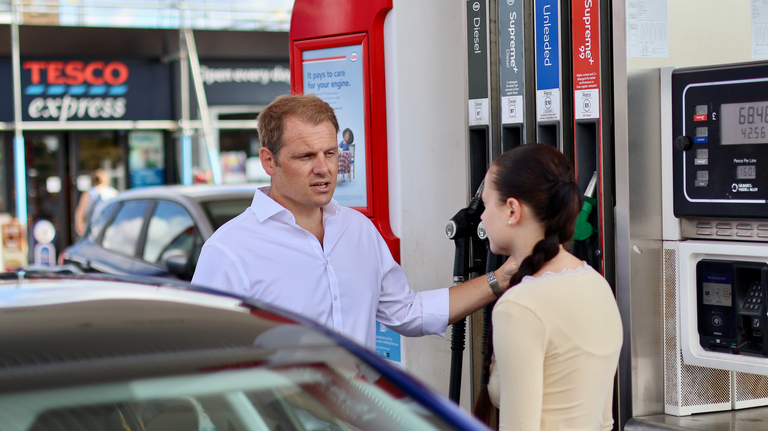
Our Economy and the Cost of Living
People are working harder than ever, paying more in taxes and bills, and too often getting less in return. That has to change.
Across Sutton, Cheam and Worcester Park, families are struggling with the cost of everyday essentials. Housing is increasingly unaffordable, energy bills remain far too high, and local businesses are finding it harder to keep their doors open.
After years of economic stagnation, the promise that hard work will bring greater security and opportunity is slipping away for too many people. That has to change.
My approach to the economy is guided by three principles: security, empowerment and growth.
Security means knowing you can afford your bills, keep a roof over your head and provide for your family. Empowerment means having the freedom and opportunity to build a better life, start a business, develop new skills and make the most of your talents. And growth is what makes all of that possible, by creating better jobs, raising incomes and funding the public services we all rely on.
I believe that Britain has enormous economic potential. We have brilliant scientists and engineers, entrepreneurs and innovators, and some of the world's best universities and research institutions.
But too much of that potential is being held back by a broken system.
We need to fix our relationship with Europe, stop penalising work and enterprise, and make the serious investments in infrastructure and technology that will shape our future.
We also need to make sure the benefits of growth reach everyone, rather than being hoarded by a small number of powerful companies and wealthy individuals.
A stronger economy should mean stronger communities, more opportunities and a better quality of life for everyone.
That's what I'm fighting for in Sutton and Cheam, across London and in Parliament.
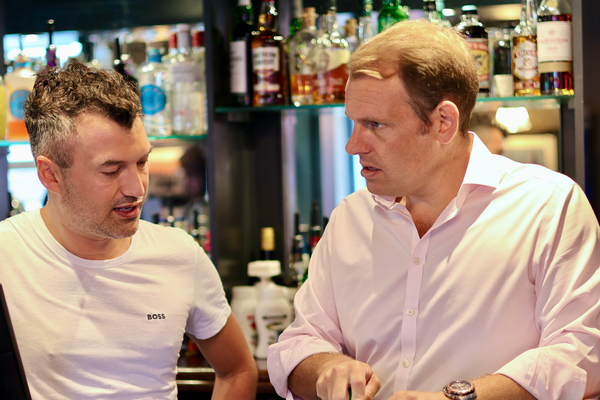
Cutting income tax for working people
For too long, successive governments have raised taxes by freezing the thresholds at which people start paying them. Hardworking people deserve to keep more of what they earn.
As wages have risen to keep up with inflation, more people have been dragged into paying income tax and the higher 40p rate.
I think this is fundamentally unfair.
In London, where salaries are often higher simply to compensate for the enormous cost of housing and living in our capital, the problem is particularly severe.
In October 2026, I highlighted new House of Commons Library figures showing that an estimated 110,000 Londoners would be dragged into paying higher-rate income tax in 2026-27 because of frozen tax thresholds.
That's enough people to fill Wembley Stadium and the O2 Arena.
Among those affected are the teachers, nurses, police officers and other essential workers who keep our city going. Many receive London-weighted salaries to cope with our extraordinary housing costs, yet are being penalised by a tax system that increasingly fails to recognise the pressures they face.
That's why I'm backing the Liberal Democrats' plan for a major income tax cut.
Our plans would:
- Raise the income tax-free personal allowance and employee National Insurance threshold to £15,000 over five years.
- Put around £680 a year back into the pockets of most taxpayers once fully implemented.
- Take an estimated 2.5 million people out of paying income tax altogether.
- Raise the threshold for the 40p rate from £50,270 to £56,000, taking around 760,000 people out of higher-rate tax.
We want to fund these changes through the additional economic growth that we believe can be unlocked by rebuilding our trading relationship with Europe.
When the Liberal Democrats were in government, we raised the personal allowance substantially, taking millions of people out of income tax. We showed that we could reward work and aspiration while continuing to protect essential public services.
Our new plan, announced by Ed Davey at our 2026 Conference, builds on that achievement.
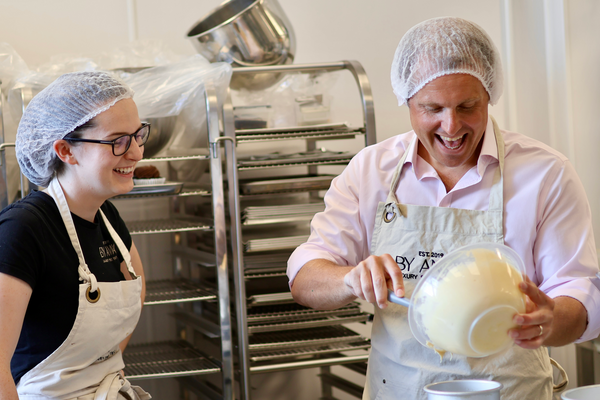
Backing businesses
It's not only employees who are being squeezed.
Local businesses across Sutton, Cheam and Worcester Park have been battling rising rents, higher energy bills and increasing employment costs.
I have repeatedly opposed the Labour Government's hike in employers' National Insurance contributions, which risks making it harder for businesses to take on new staff and invest in their future.
In December 2024, I challenged the Government in Parliament over the impact on small businesses in places like Worcester Park and North Cheam.
I also launched a survey of local businesses to hear directly about the pressures they were facing.
The Liberal Democrats want to replace the broken business rates system with a fairer Commercial Landowner Levy, and reduce the employment tax burden on businesses taking on young and part-time workers.
We should be making it easier for our high streets to thrive, not piling more costs onto the businesses that make our communities work.
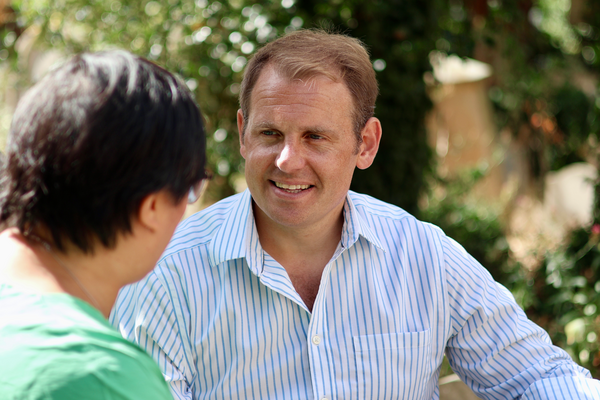
Tackling the cost of living crisis
The cost of living crisis reaches into almost every aspect of our lives. From the weekly food shop to transport, housing and water bills, ordinary families are being asked to pay more and more.
I hear about it constantly when speaking to residents across Sutton and Cheam.
People who were previously comfortable are now struggling to make ends meet. Young people are finding it harder to move out of their parents' homes, pensioners are worried about heating costs, and working families are cutting back on things they once took for granted.
In January 2026, I raised the cost of everyday groceries in the Commons, pointing to the price of basics like milk, eggs and butter.
Even the humble Freddo bar has become an unlikely symbol of just how much more expensive everyday life has become…
In response to the crisis we're in and the budget the Chancellor brought forward in October 2026, the Liberal Democrats have proposed an emergency £14 billion cost-of-living package to bring down household costs and support local businesses.
Our proposals include:
- A 10% cut in rail fares and £1 bus fares, making public transport more affordable.
- Lower VAT on public electric vehicle charging, helping drivers make the switch to cleaner transport.
- A temporary cut in hospitality VAT from 20% to 15%, supporting pubs, cafés, restaurants and the people who use them.
The package is designed to provide immediate relief while our wider plans for economic growth take effect.
Liberal Democrat estimates suggest it could save households around £350 on average over the period covered by the emergency measures.
We would fund it through measures including taxes on exceptional bank profits, recovering excess profits from energy network companies and using additional oil and gas tax revenues.
Bringing down Energy Bills
Energy is an essential part of everyday life. Nobody should be left shivering in their home because they cannot afford to turn the heating on.
The energy crisis has exposed just how vulnerable British households are to international price shocks, an inefficient housing stock and a market that fails to pass the benefits of cheaper renewable power on to consumers.
In January 2026, I led a Westminster Hall debate on energy bills.
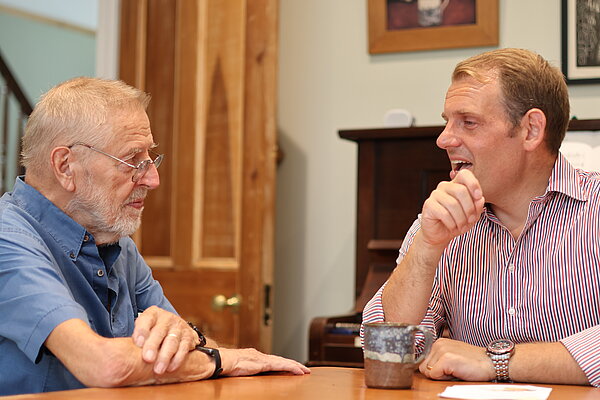
I spoke about a woman I had met on the doorstep in Worcester Park who answered her door wearing a coat and scarf. I thought she was heading out.
She wasn't. She was simply too worried about the cost of heating her home.
It was a heartbreaking reminder of the reality facing millions of families.
That's why I'm backing the Liberal Democrats' plan for an Essential Energy Guarantee, which would make a basic amount of energy available at a discounted price.
Under our proposals, every household would receive a discount on an amount of energy equivalent to half the consumption of a typical home.
Our estimates suggest the scheme would save households around £100 a year on average, with greater support for those who need it most, including lower-income families, households with children and disabled people.
The least well-off households would save around £140 a year on average.
We would pay for the scheme by clawing back excess profits from the energy network companies that own the pipes and cables delivering power to our homes.
These companies operate essential infrastructure, yet have benefited from billions of pounds in unexpected profits. I think that money should be used to bring down bills.

Fixing the energy system for the future
Immediate help with bills is essential, but we also have to tackle the reasons energy costs so much in the first place.
Britain remains far too dependent on internationally traded fossil fuels. Every time conflict or instability sends gas prices soaring, ordinary people end up paying the price.
I believe that the transition to clean, home-grown energy is one of the best ways to strengthen our economic and national security.
We should be investing in solar and wind power, modern nuclear technology, better electricity networks, energy storage and the infrastructure needed to support electric vehicles and heat pumps.
Crucially, we must also reform the electricity market so that households can benefit from cheaper renewable generation, rather than continuing to see their bills driven by volatile gas prices.
The Liberal Democrats have set out an ambition to halve energy bills over the next decade through a combination of these reforms.
I also support a national programme to improve the energy efficiency of our homes.
Better insulation, modern heating systems and investment in new technology can permanently reduce the amount of energy households need.
Our proposals for an Energy Security Bank would offer affordable loans of up to £20,000 for households and £50,000 for small businesses to invest in improvements such as insulation, heat pumps and solar panels.
As an engineer, I'm particularly excited by the possibilities offered by these technologies.
I've raised these issues repeatedly in Parliament, including calling for a ten-year home upgrade programme and highlighting innovative projects already making a difference across London.
We can bring down bills, create skilled jobs, strengthen our energy independence and tackle climate change together.

Rebuilding our relationship with Europe
Brexit has placed enormous barriers in the way of British businesses and held back our economy. Repairing our trading relationship with Europe is one of the biggest opportunities we have to get Britain growing again.
I have always believed that Britain's future prosperity depends on strong international relationships, open markets and our ability to compete with the best in the world.
The European Union remains our most important trading partner. Yet our businesses continue to face unnecessary bureaucracy, extra costs and barriers that make it harder to export goods and services.
This affects businesses of every size, from small exporters to our globally competitive financial and professional services industries here in London.
It also affects ordinary people, through lower economic growth, weaker public finances and the rising cost of imported goods.
I have repeatedly called on the Government to stop treating our economic relationship with Europe as a settled question.
In May 2025, following the announcement of a new UK-US trade deal, I challenged the Government over its approach to international trade.
I made clear that while Britain should pursue good trading relationships around the world, the biggest opportunity to boost our economy remains closer integration with Europe.
In 2026, the Liberal Democrats proposed a new Growth and Defence Partnership with Europe.
Our plan would see Britain negotiate membership of the EU Single Market and a new Customs Union, removing many of the barriers that have held back our businesses since Brexit.
It would also strengthen cooperation on defence, helping European countries work together to protect our collective security.
Our party's economic modelling estimates that this partnership could generate around £27 billion a year in additional UK tax revenue by the end of the next Parliament.
That is the growth dividend we want to use to cut income tax and invest in the public services that families and businesses rely on.
I believe the argument for doing this is overwhelming.
Britain needs to be able to trade, invest and cooperate with our closest neighbours without unnecessary obstacles.
We have enormous strengths in science, engineering, financial services, higher education and creative industries. Closer European cooperation would help those sectors grow, attract investment and create new opportunities.
Fixing our relationship with Europe is central to fixing our economy.
The Government should stop ruling out the most effective steps it could take to deliver the growth Britain desperately needs.
Investing in the industries and infrastructure of the future
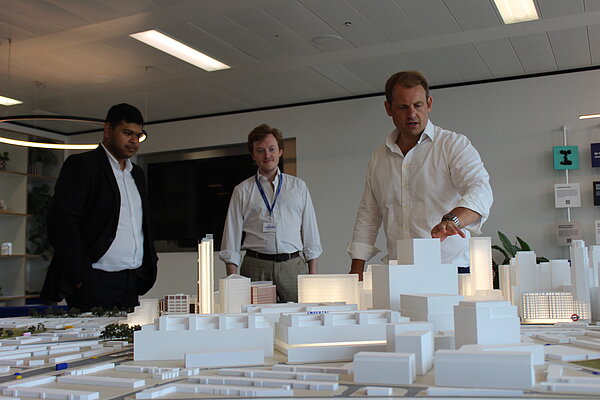
We will never build a stronger economy by focusing only on today's problems. We need to invest in the transport links, homes, technology and industries that will shape Britain's future for decades to come.
Before entering Parliament, I studied engineering at Imperial College London and worked in the transport and aviation industries around the world.
That experience shaped the way I think about economic growth.
I know how vital good infrastructure is to attracting investment, connecting communities and helping businesses succeed. I also know how important long-term planning is.
We cannot keep making short-term decisions that save money today but leave us with bigger problems tomorrow.
There are few better examples of the opportunities ahead than the London Cancer Hub in Belmont.
Sutton is already home to world-leading cancer research institutions, including the Royal Marsden Hospital and the Institute of Cancer Research.
The expansion of the London Cancer Hub will bring researchers, scientists, start-ups and established companies together to develop breakthrough treatments that could transform lives around the world.
The project has the potential to create thousands of skilled jobs, with plans projecting around 3,000 direct jobs, while attracting significant private investment into our borough.
I'm incredibly proud that Sutton is at the forefront of this work.
The Liberal Democrat Council has played a major role in bringing the project forward, and I will continue championing the investment and national support needed to realise its potential.
Read more about my work supporting cancer research in Sutton.
I'm also passionate about making Britain a world leader in the next generation of technology.
As Chair of the All-Party Parliamentary Group for the Future of Aviation and Aerospace, I've worked to support the development of sustainable aviation fuels and the technologies needed to decarbonise flight.
I served on the committee scrutinising the Government's Sustainable Aviation Fuel legislation, helping make the case for stronger incentives to develop a British industry in cleaner fuels.
These technologies offer opportunities for skilled jobs, new investment and greater energy security.
The same principle applies across our economy, from advanced manufacturing and biotechnology to renewable energy and battery storage.
The Liberal Democrats want to make Britain a better place to launch and grow innovative businesses, including by improving access to investment, supporting research and development and removing unnecessary bureaucracy.
We've also proposed a new Department for Growth, bringing together economic strategy, taxation, business and investment policy, so that long-term growth becomes a central priority of government.
Read more about the Liberal Democrats' plan to get Britain growing again.
We have the talent, the expertise and the ambition to build a genuinely world-leading economy. We need a Government willing to invest in that future.